
9 Recommended Areas For All Budgets
A comprehensive guide that is easy to navigate
Wondering where to stay in Madrid first time? You’re in for a treat.
The Spanish capital is a city of energy, elegance, and endless things to discover.
From tapas-fueled nights in lively local bars to golden sunsets over royal palaces, Madrid has a way of pulling you in fast, but choosing where to stay can feel a bit overwhelming at first.
Like many big cities, Madrid is a patchwork of very different neighborhoods.
Some are all about grand boulevards, world-class museums, and historic landmarks, while others are packed with cool cafés, indie boutiques, and a more local vibe.
Whether you want to be close to the main sights, dive into the food scene, or just wander around charming streets and soak up the atmosphere, there’s a barrio (neighborhood) that fits your style.
In this guide, I’ll walk you through the best areas to stay in Madrid for first-time visitors, based on personal experience, local tips, and what kind of trip you’re dreaming of.
Whether you’re a culture lover, a night owl, or just here for the churros (no shame), there’s a perfect base for you. Let’s find it.
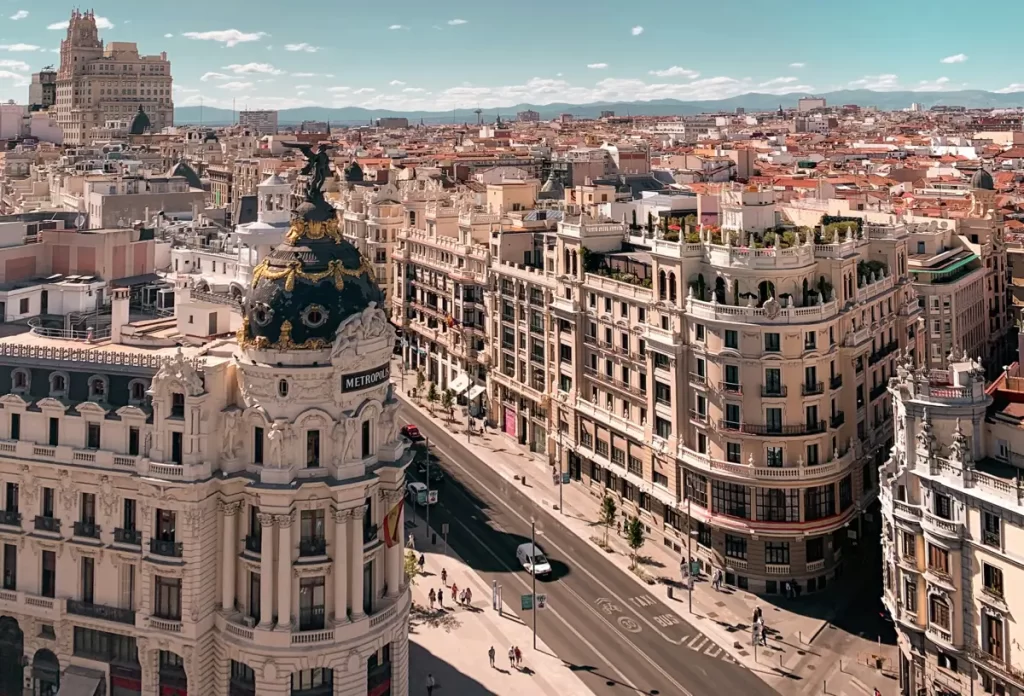
The best areas to stay in Madrid first time are Centro, Chueca, Lavapiés, Malasaña, Retiro, La Latina, Salamanca, Atocha, and Chamberí.
Centro puts you right in the historic heart, while nearby La Latina, Lavapiés, and Malasaña mix old-world charm with great tapas bars, street art, and local flavor.
Chueca and Salamanca are trendier – one buzzing with nightlife and LGBTQ+ pride, the other elegant and upscale.
Retiro and Chamberí are quieter, more residential spots perfect for relaxed city strolls, ideal for families.
Atocha, home to the main train station and famous museums, is ideal for culture lovers and day-trippers alike.
All recommended areas are well-connected to public transport, in particular, the metro.
In the next paragraph, you’ll find an overview of each recommended area with a brief description.
Below, you find an overview of all the recommended areas along with a short explanation of what makes that area so special.
You can tap on the red link to go immediately to that recommended area. Or, simply continue reading the article.
Centro – If it’s your first time in Madrid and you want to be close to all the big sights, Centro is a no-brainer. You’ll be steps away from the Royal Palace, Plaza Mayor, and endless shops and restaurants. It’s not the cheapest area to stay, but you’ll save on transport since everything is right on your doorstep.
Chueca – Chueca is fun, vibrant, and full of personality, a favorite among younger travelers and the LGBTQ+ community. It’s packed with stylish bars, trendy boutiques, and some of Madrid’s best nightlife. If you want a lively base with a modern vibe, this is it.
Lavapiés – Lavapiés is a colorful, multicultural neighborhood with a laid-back feel, and it’s one of the best spots if you’re traveling on a budget. Expect cheap eats, cool tapas bars, and good metro access to get around. It’s got a gritty charm that many travelers fall in love with.
Malasaña – Malasaña is Madrid’s indie heart, think vintage shops, quirky bars, and late-night music venues. It’s popular with students and creatives, and while it’s not the prettiest area, it’s full of energy and just a short walk from Gran Vía.
Retiro – For a quieter, more family-friendly vibe, Retiro is a great choice. You’re close to the famous Retiro Park and a few cultural spots, but you’ll need the metro for major tourist sites. It’s a peaceful place to come home to after a day of exploring.
Salamanca – If you’re looking to splurge a little, Salamanca is Madrid’s posh side. Designer stores, upscale restaurants, and polished streets make this the go-to for luxury travelers. It’s sophisticated, safe, and incredibly comfortable.
Atocha – Atocha is all about convenience. It’s home to Madrid’s main train station, making it a perfect base if you’re planning day trips. The area itself is fairly quiet and not super exciting, but you’ll be well-connected and close to top museums like Reina Sofía.
La Latina – La Latina is a charming, budget-friendly neighborhood known for its tapas bars and cobbled lanes. It feels surprisingly central, you can walk to many top sights, yet it still offers plenty of affordable food and accommodation options. Perfect for foodies and culture lovers alike.
Chamberí – Chamberí is more local and low-key, with leafy streets, little plazas, and a calmer pace. It’s not a tourist hotspot, which is exactly why some travelers love it. Plus, you’re still just a quick metro ride from all the action.
Centro is the historic heart of Madrid, and hands down the best place to stay if it’s your first time in the city.
Here, you’ll find yourself surrounded by major landmarks like Plaza Mayor, the Royal Palace, and the Almudena Cathedral: all within easy walking distance.
But it’s not just about the sights; the area itself is steeped in history, with elegant architecture, bustling plazas, and charming old streets that practically beg to be explored.
Wandering around Centro is a big part of the experience, and you won’t go hungry while doing it.
Classic spots like Sobrino de Botín (the world’s oldest restaurant), Mesón del Champiñón, and Taberna La Concha are all here, along with the popular Mercado de San Miguel for a more modern tapas experience.
On top of all that, Centro is extremely well connected.
With metro stations like Ópera and Sol linking to nearly every line in the city, getting around is a breeze.
Just keep in mind: being in the middle of everything does come at a price, and hotels here tend to be a bit more expensive.
Still, the location more than makes up for it.
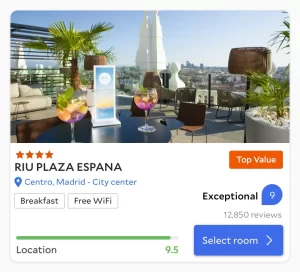

Just north of Centro, Chueca is one of Madrid’s most vibrant and stylish neighborhoods, and a top pick for travelers who want to mix culture with nightlife.
While it’s not right next to the city’s biggest landmarks, you’re still very central, and just a couple of metro stops away from places like Sol or the Royal Palace.
The neighborhood is known for its energetic, inclusive vibe and is considered the heart of Madrid’s LGBTQ+ community.
By day, Chueca charms with elegant buildings, cozy cafés, boutique shopping, and small art galleries.
It’s home to Museo del Romanticismo, an often-overlooked gem that gives you a glimpse into 19th-century aristocratic life, as well as Fundación Mapfre, which hosts rotating art exhibitions.
But by night, the area really comes alive: think buzzing plazas, lively terraces, and an endless supply of tapas bars and clubs that stay open into the early morning.
Food lovers will also enjoy Mercado de San Antón, a trendy food market with gourmet bites, a rooftop bar, and a relaxed atmosphere perfect for a late lunch or evening drinks.
Chueca is served by the green metro line (Line 5), and you’re only a stop or two from major connections like Gran Vía and Alonso Martínez, so getting around is easy.
If you’re a younger traveler or someone who enjoys staying in a place with a bold personality, late-night energy, and cool, creative locals, Chueca might just be your perfect base in Madrid.


If you’re traveling on a budget but still want to stay fairly central, Lavapiés is one of the best options in Madrid.
Tucked in the southeastern corner of the old city center, this multicultural neighborhood may not have the postcard-perfect charm of some other areas, but it more than makes up for it with character, affordability, and local flavor.
Lavapiés is known for its diversity, you’ll find everything from traditional Spanish taverns to North African restaurants, Indian curry houses, and vegan cafés.
The area around Calle Argumosa is especially lively, filled with tapas bars, casual pubs, and outdoor terraces that are perfect for people-watching.
It’s a neighborhood where artists, students, and long-time locals mix, giving it a gritty, authentic vibe that feels real and unfiltered.
Cultural highlights include the Reina Sofía Museum (home to Picasso’s Guernica) and the Tabacalera cultural center, a former tobacco factory turned edgy art space.
For public transport, Lavapiés and Embajadores metro stations connect you easily to the rest of the city, with Sol just a few stops away.
Sure, Lavapiés may not be as polished or close to the big sights as Centro or La Latina, but for the price and the experience, it’s a fantastic base for adventurous, budget-conscious travelers.
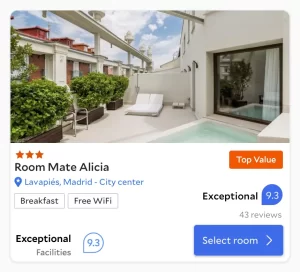
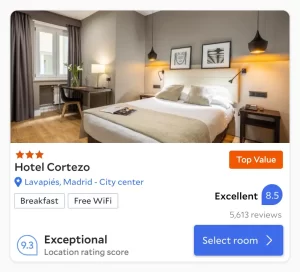
Right next to Chueca, Malasaña is Madrid’s bohemian playground, a neighborhood full of quirky bars, vintage shops, tattoo studios, and late-night hangouts.
It’s a top choice for travelers looking to dive into the city’s nightlife, especially those into live music, indie scenes, and a slightly alternative vibe.
While it might not be the prettiest barrio at first glance, it definitely has personality, and that’s what makes it so appealing.
The heart of Malasaña beats around Plaza del Dos de Mayo, a popular meeting point where locals gather on terraces with beers and tapas in hand.
By night, the area transforms into a lively mix of dive bars, cocktail spots, and underground venues playing everything from Spanish rock to international DJs.
Compared to the more polished Chueca, Malasaña feels grittier and younger, think more students, artists, and creatives.
You’ll find several metro stations nearby, like Tribunal, Noviciado, and San Bernardo, making it easy to reach other parts of Madrid.
And since the neighborhood borders Gran Vía, you’re never far from the action.
If you’re after an energetic, youthful vibe with nightlife at your doorstep, Malasaña is a fun and central place to base yourself, especially if you don’t mind a bit of edge.

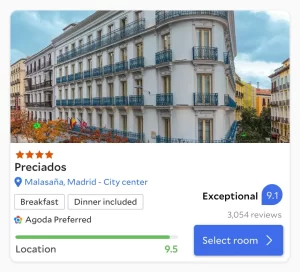
If you’re after a peaceful, elegant area with a cultural edge, Retiro is a fantastic choice.
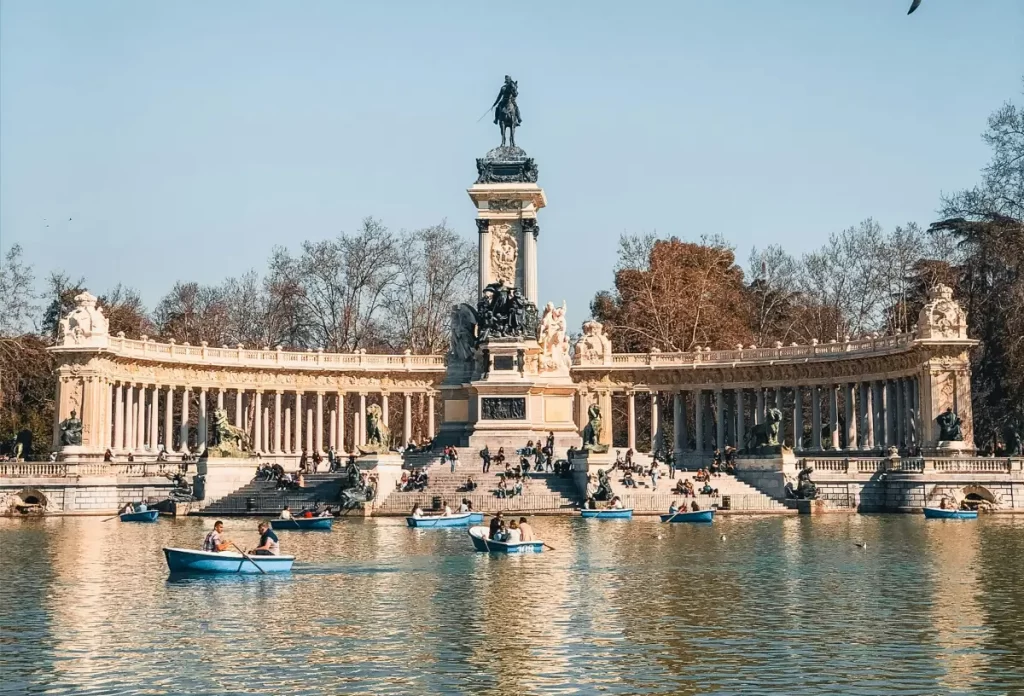
Located just east of the city center, this neighborhood is best known for El Retiro Park, a massive green oasis that’s perfect for morning walks, paddle boat rides, picnics, or simply escaping the city buzz.
It’s one of Madrid’s most beloved public spaces, and staying nearby gives you front-row access to its tree-lined paths and relaxing vibe.
Retiro isn’t just about nature, it’s also home to some of the city’s top cultural landmarks.
The Prado Museum, with masterpieces by Goya, Velázquez, and El Bosco, is right on the edge of the park, alongside the Botanic Gardens, Puerta de Alcalá, and the beautiful Palacio de Cibeles.
It’s a quieter part of town, ideal for travelers more interested in art, museums, and leafy strolls than bar-hopping or late-night parties.
The area is well connected by metro (look for Retiro, Ibiza, and Atocha stations), and Atocha, Madrid’s main train station, sits just south of the park: ideal for day trips to cities like Toledo or Segovia.
Retiro is especially well-suited for families, older couples, or anyone who prefers calm over chaos.
It may not be steps away from the city’s nightlife or busiest tourist squares, but with excellent transport links and world-class culture on your doorstep, it’s a perfect base for a more relaxed stay in Madrid.
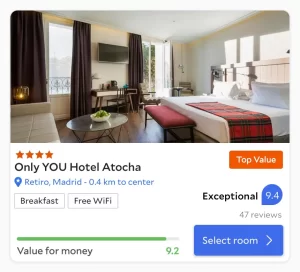
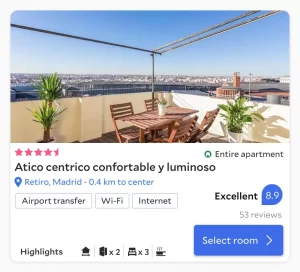
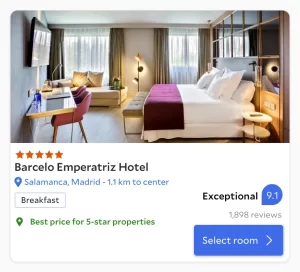
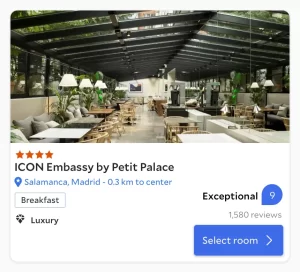
Every city has its chic side, and in Madrid, Salamanca is where elegance lives.
This refined neighborhood, located just north of Retiro Park, is known for its designer boutiques, polished streets, and upscale vibe.
If your idea of the perfect city break includes luxury hotels, fine dining, and a splash of indulgence, Salamanca is where you’ll want to unpack your bags.
This is the land of Michelin-starred restaurants, world-famous fashion houses, and some of Madrid’s most exclusive shopping streets, especially the “Golden Mile” along Calle de Serrano, lined with brands like Chanel, Loewe, and Louis Vuitton.
The area is also incredibly clean, safe, and quiet, perfect if you prefer sophistication over nightlife.
While you’re a bit removed from the main historic sights in Centro, you’re still well-connected by metro (stations like Serrano, Velázquez, and Goya) and within easy reach of Retiro’s cultural attractions.
And when you’re ready to explore the city’s buzz, Gran Vía, Madrid’s iconic shopping and entertainment strip, is just a short stroll or metro ride away.
Salamanca is best for travelers who want comfort, class, and a more relaxed, upscale experience in the Spanish capital.
If budget isn’t a major concern, you’ll find everything you need for a luxurious Madrid stay right at your doorstep.
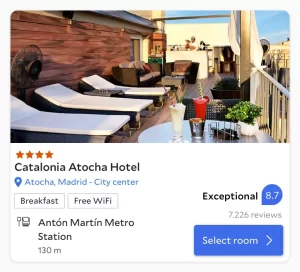
Atocha may not be the prettiest or most exciting neighborhood in Madrid, but it’s incredibly practical, especially if you’re visiting the city for just a couple of days or planning to explore other parts of Spain by train.
Located just southeast of Centro, Atocha is home to Estación de Atocha, Madrid’s main train station and a major transport hub with high-speed AVE connections to cities like Seville, Valencia, and Barcelona.
While the area is mostly residential and lacks major tourist attractions, it’s very well connected to public transport, with metro, suburban trains (Cercanías), and long-distance options all in one place.
You’re also within walking distance of the Reina Sofía Museum and not too far from El Retiro Park and the Prado Museum, making it a surprisingly good base for art lovers.
Hotel prices around Atocha tend to be more affordable than in trendier areas like Centro or Salamanca, which is a plus for budget-conscious travelers.
That said, like in many cities, train station areas can feel a bit sketchy at night. Use common sense, avoid empty streets after dark and keep an eye on your belongings.
If you’re arriving or leaving Madrid by train, planning day trips, or simply want a well-connected base without the higher price tag, Atocha is a convenient and efficient choice.

Barrio La Latina is one of Madrid’s most charming and down-to-earth neighborhoods, and a great pick for first-time visitors looking to stay central without blowing the budget.
Not to be confused with the larger Latina district farther south, this compact area lies on the southeastern edge of Centro, bordering Atocha and just a short walk from many of the city’s top attractions like Plaza Mayor and the Royal Palace.
La Latina is a haven for foodies.
The narrow streets around Calle de la Cava Baja are packed with cozy tapas bars, traditional taverns, and lively bodegas, making it one of the best areas in Madrid to go out for tapas.
Whether you’re after crispy croquetas, jamón ibérico, or a cold vermouth on tap, you’ll find it here, often at better prices than in more touristy areas.
The neighborhood has a relaxed, local vibe, with leafy squares, street art, and historic buildings that give it an authentic feel.
And if you’re in town on a Sunday, don’t miss El Rastro, Madrid’s iconic open-air flea market, a lively maze of stalls selling everything from antiques to vintage clothes.
With good metro connections (via La Latina station) and a walkable location, Barrio La Latina offers an ideal mix of affordability, atmosphere, and accessibility, especially for travelers who want to eat well, stay local, and still be close to the action.


The last area that I recommend is Chamberí.
If you’re looking for a quieter, more authentic slice of Madrid – away from the tourist crowds but still central – Chamberí is a hidden gem.
Sandwiched between the city’s historic center and the Santiago Bernabéu Stadium, this largely residential district is made up of six smaller neighborhoods, each with its own charm.
While it doesn’t offer the big-name attractions of Centro or the nightlife of Malasaña, it makes up for it with leafy streets, peaceful plazas, and a more local rhythm of life.
Chamberí is great for travelers who want a calm, comfortable base with solid metro access (stations like Iglesia, Quevedo, Canal, and Ríos Rosas make getting around the city easy).
The area is also full of lesser-known gems, like the Chamberí Ghost Station, a preserved 1920s metro station turned museum, and Museo Sorolla, the former home of the famous Spanish painter.
Accommodation here tends to be more affordable than in trendier areas, with a good mix of boutique hotels, short-term rentals, and family-run stays.
You’ll also find plenty of local bakeries, cafés, and neighborhood tapas spots, without the tourist markup.
If you want to experience Madrid like a local and retreat to a quieter area after a day of sightseeing, Chamberí is a smart and underrated choice.


Where to stay in Amsterdam first time
Where to stay in Barcelona first time
Where to stay in Berlin first time
Where to stay in Budapest first time
Where to stay in Istanbul first time
Where to stay in Lisbon first time
Where to stay in London first time
Where to stay in Madrid first time
Where to stay in Paris first time
Where to stay in Prague first time
Where to stay in Rome first time