
If you’re trying to choose between Asakusa vs Akasaka, you’re weighing two very different sides of Tokyo.
Both neighborhoods have a lot to offer, but the vibe, surroundings, and travel experience in each one couldn’t be more different.
Here’s a detailed breakdown to help you decide which area suits your Tokyo adventure best.
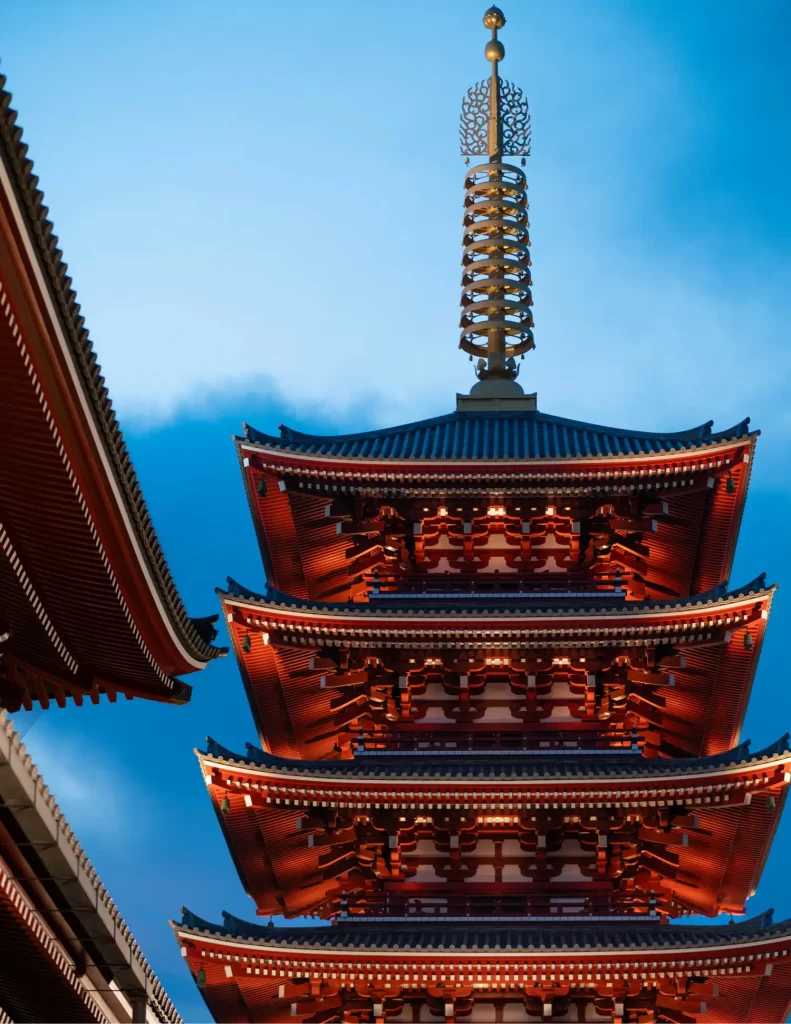
Asakusa is where you go to experience a more historic side of Tokyo.
Home to the famous Senso-ji Temple, the city’s oldest and most visited temple, Asakusa is one of the few areas that still shows glimpses of Edo-period Tokyo.
The streets around the temple are lined with souvenir shops, kimono rentals, and traditional sweet stalls, making it a hotspot for tourists looking to dive into Japanese culture.
Asakusa feels slower and more grounded than other parts of the city.
Rickshaws carry visitors down pedestrian-friendly roads, while river cruises depart nearby for scenic rides along the Sumida River.
It’s not the business heart of Tokyo, nor is it a nightlife hub.
But it offers an affordable and atmospheric base, especially for first-time visitors who want to see iconic sights and take in the “old Tokyo” vibe.
That said, Asakusa does get busy during the day, especially around Senso-ji.
At night, it’s much quieter: great for travelers who prefer peaceful evenings, less so for those seeking nightlife.
The area is well-connected by the Ginza, Asakusa, and Tobu lines, but it’s a bit farther from Tokyo’s more central districts.
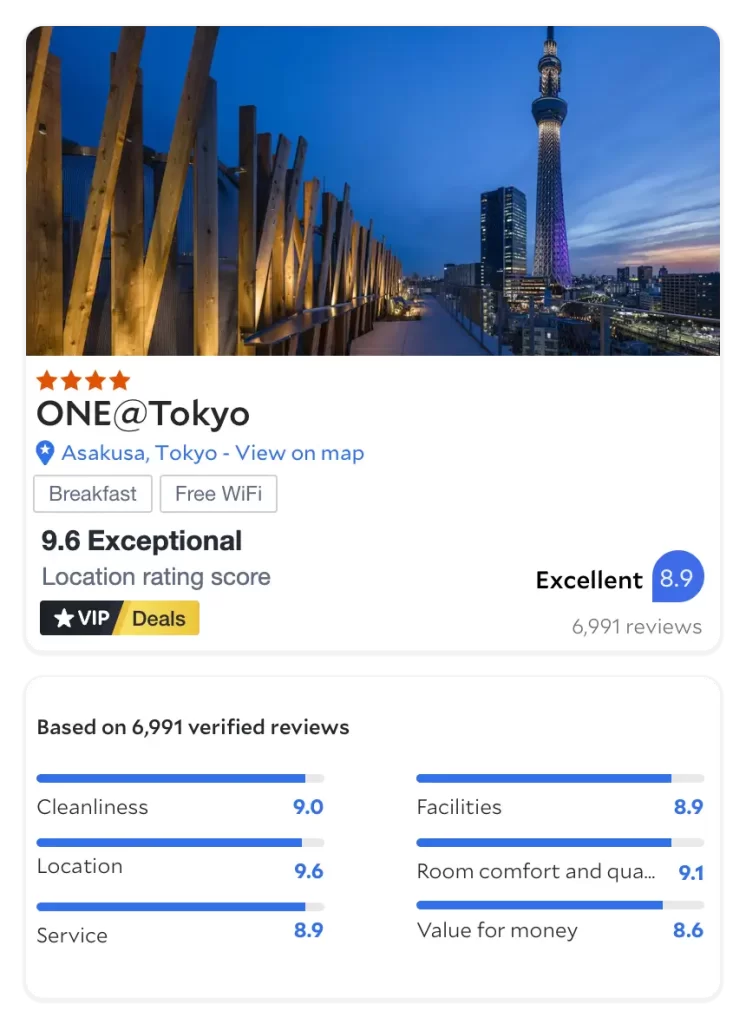
Accommodation here ranges from budget guesthouses to traditional ryokan and a few modern hotels.
If you want to wake up steps away from a historic temple, Asakusa delivers.
Akasaka, on the other hand, is a polished, upscale neighborhood located near Tokyo’s governmental and business core.
It sits between Roppongi, Aoyama, and the Imperial Palace, making it a central yet relatively peaceful place to stay.
While it lacks the flashy tourist attractions of places like Shibuya or Asakusa, Akasaka’s strength lies in its convenience, modern comfort, and understated sophistication.
The area is popular among business travelers and mid-to-upper-range tourists.
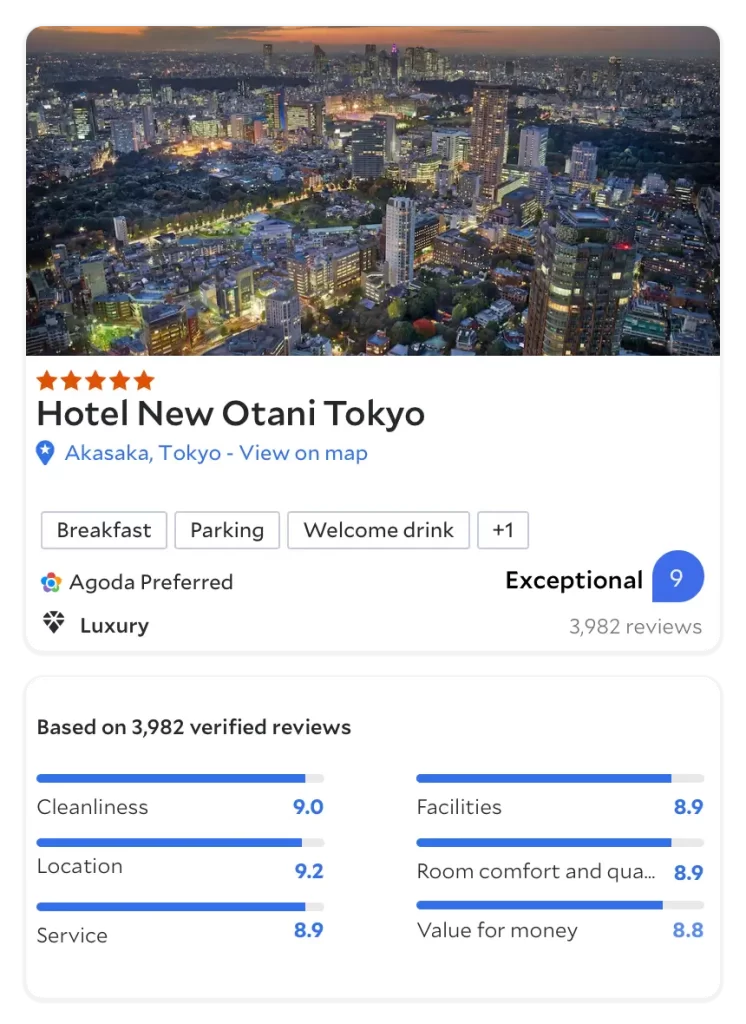
You’ll find a mix of sleek business hotels, serviced apartments, and boutique stays.
The restaurant scene is excellent: think sushi bars, upscale izakaya, and even Michelin-starred spots, yet far more local in tone than touristy.
At night, Akasaka transforms into a mellow, after-work dining and drinking scene without ever getting wild.
Transportation-wise, Akasaka is extremely well-connected via the Chiyoda Line and nearby transfer stations like Akasaka-Mitsuke.
You can get to Shibuya, Shinjuku, and Tokyo Station quickly and easily.
Akasaka may not have a famous landmark like Senso-ji, but it offers a high standard of convenience, making it a great base for exploring the rest of the city without dealing with crowds.
Choose Asakusa if you:
Choose Akasaka if you:
Asakusa is ideal if you want a slice of historic Tokyo with cultural flair, traditional experiences, and a laid-back feel.
It’s great for travelers wanting to explore temples and markets and soak up the city’s heritage.
Akasaka is the better choice if you want a quiet, refined, and convenient location in the heart of the city.
It doesn’t shout for attention but gives you everything you need to move smoothly around Tokyo.
Ultimately, if it’s your first time in Tokyo and you want history on your doorstep, Asakusa will likely charm you.
If you’re returning, or value comfort and easy access to all corners of the city, Akasaka may be the smart pick.