
If you’re deciding between Jing’an vs Huangpu for your stay in Shanghai, you’re already on the right track.
These two districts are the most central, most connected, and arguably the most iconic areas to base yourself. But while they sit side by side on the map, they feel very different on the ground.
Jing’an is polished, modern, and subtly luxurious. It’s the stomping ground of expats, digital nomads, and local creatives who want a refined lifestyle with a cultural edge.
Huangpu is the heart of Old Shanghai. It’s where colonial architecture meets chaotic alleyways, where the city’s past and present blur together. It’s louder, busier, and packed with famous sights.
I’ve and spent a lot of time in both districts. Here’s how they really compare.
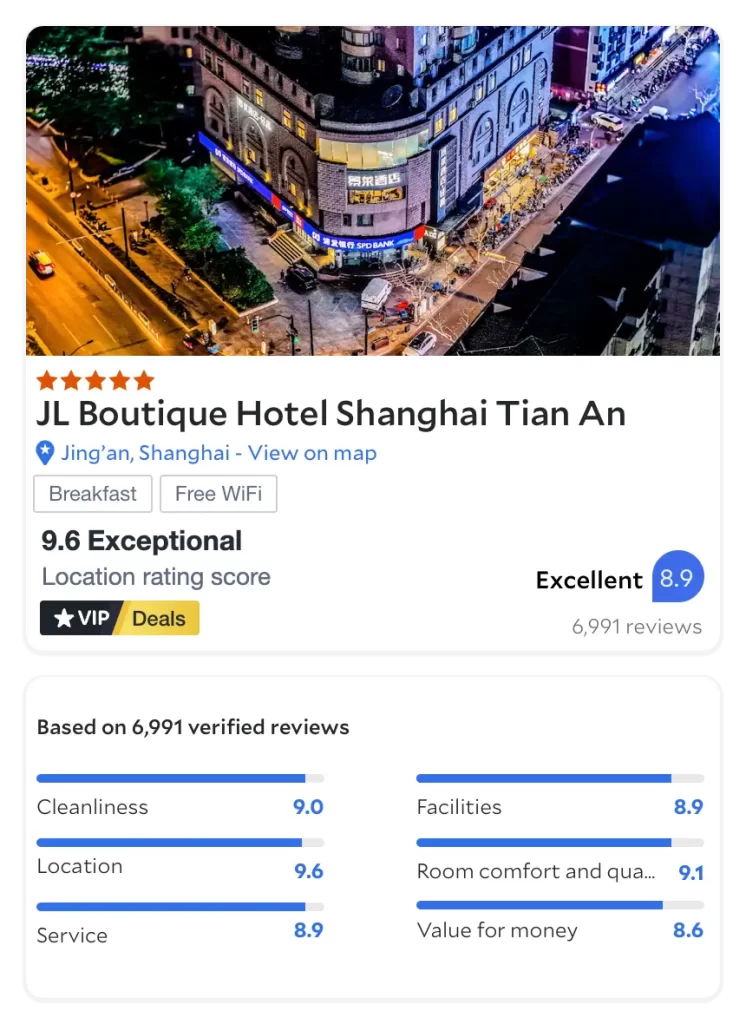
Jing’an is the kind of place where you can get your oat milk latte, go to a gallery opening, and unwind at a rooftop bar without ever leaving the neighborhood.
It’s known for its mix of luxury and livability. You won’t find many iconic tourist sights here, but that’s kind of the point. Jing’an feels more like Shanghai for Shanghai people.
It’s named after Jing’an Temple, a golden-roofed Buddhist temple that sits dramatically in the middle of a busy commercial street.
Around it, you’ll find designer boutiques, leafy streets, and glassy office towers. But a few blocks in any direction and you’re back in residential neighborhoods full of cafés, quiet parks, and historic lanes.
The vibe in Jing’an is calmer than Huangpu. It’s walkable, with wide tree-lined avenues and lots of green pockets.
Wuding Road has a thriving nightlife scene that feels more local and underground than the tourist-packed bars near The Bund. There are fantastic co-working spaces, brunch spots, and gyms with smoothie bars attached.
Jing’an is especially popular with expats and upwardly mobile locals. It’s a safe, clean, and well-organized area that feels international without losing its Shanghainese soul.
You can spend your days here hopping between art spaces, boutique fitness studios, and bakeries that serve kouign-amanns alongside scallion pancakes.
Accommodation here ranges from sleek five-star hotels to serviced apartments and cozy Airbnbs inside lane houses.
It’s not the cheapest part of town, but it’s excellent value if you want modern comforts and a slower pace.
The downside? You won’t find the big-name attractions in Jing’an. You’ll need to hop on the metro or grab a DiDi to see The Bund, Yu Garden, or the French Concession.
But if you’re staying a little longer or want a base that feels like home, Jing’an is a great choice.
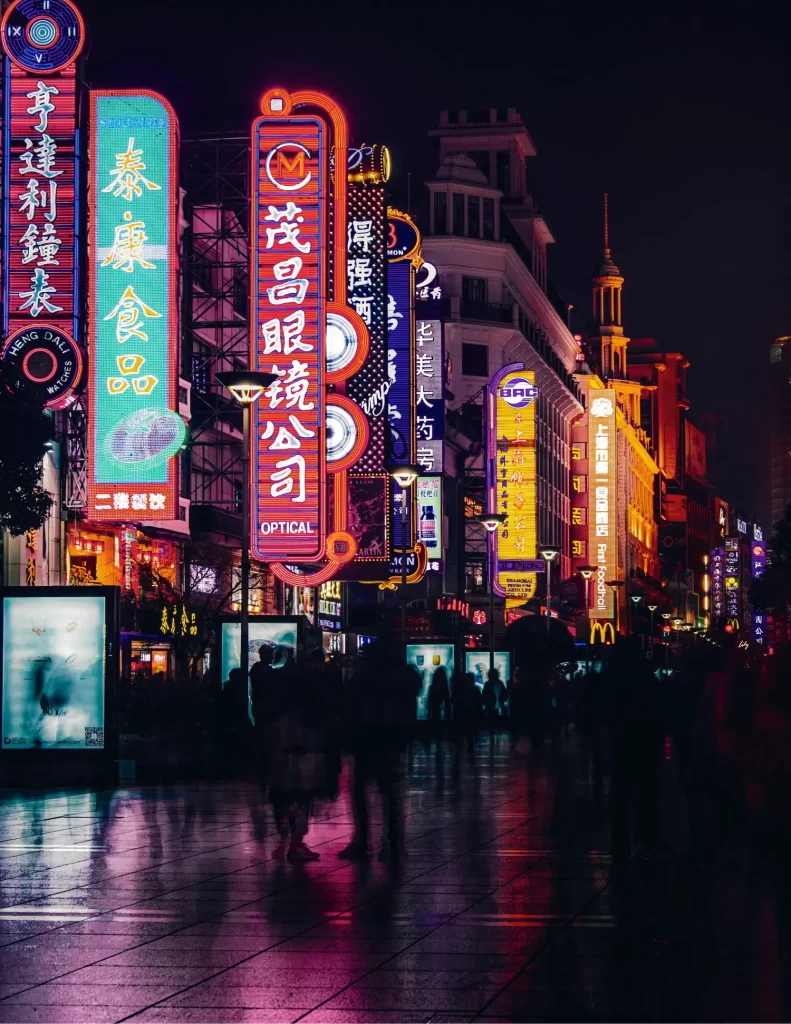
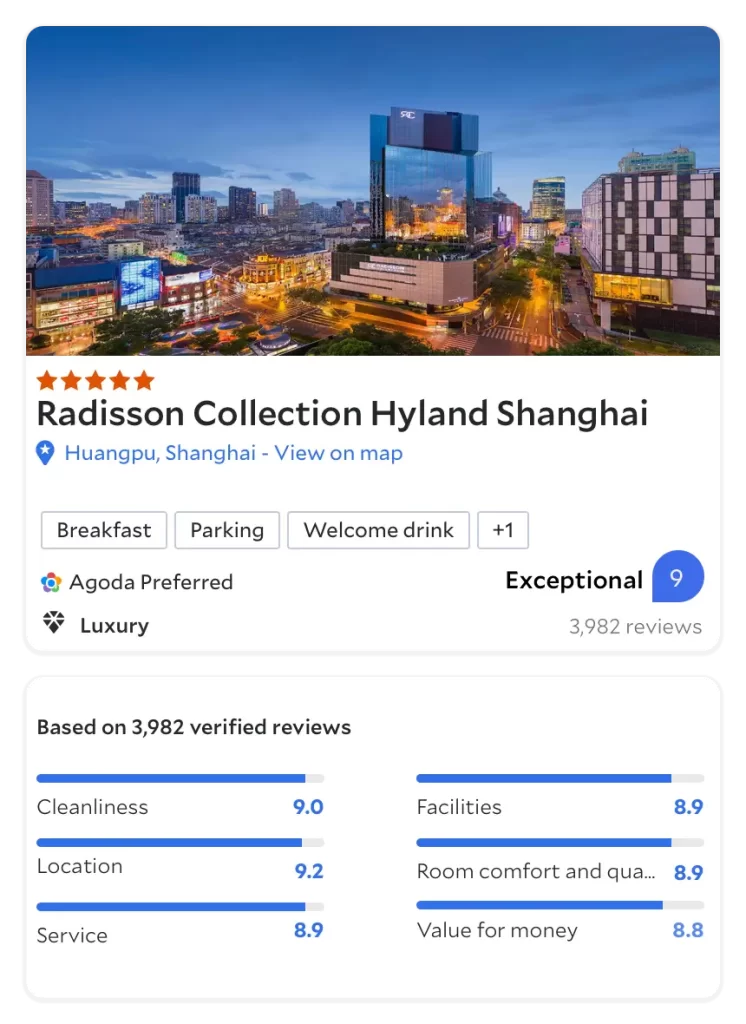
If it’s your first time in Shanghai, chances are most of what you’ve seen in pictures is in Huangpu.
This is the beating heart of the city, where neon lights bounce off the Huangpu River, and the skyline of Pudong looms across the water. It’s where you’ll find The Bund, People’s Square, East Nanjing Road, Yu Garden, and the Old City.
Huangpu is busy. It’s messy in that exciting, urban way that makes you feel like you’re really somewhere.
The streets are packed with locals, tourists, street food vendors, honking cars, and selfie sticks. But it’s also where you get the strongest dose of Shanghai’s unique energy: East-meets-West, old-meets-new, chaos-meets-elegance.
The Bund is the district’s crown jewel.
This riverfront promenade lined with 1920s-era buildings is stunning at night, when the skyline lights up and boats cruise by.
A few blocks behind The Bund, you’ll find Nanjing Road, one of the busiest shopping streets in the world. It’s overwhelming, but in a good way.
The Old City is another highlight. It’s one of the few parts of Shanghai that still feels distinctly Chinese, with traditional architecture, incense-filled temples, and maze-like alleyways where life hasn’t changed much in decades.
You’ll stumble upon noodle shops, mahjong games, and fruit vendors set up on plastic stools.
Despite the chaos, there are plenty of peaceful corners. People’s Park is a great place to people-watch, especially on weekends when locals gather for matchmaking markets or tai chi.
And tucked behind the big streets are charming lilongs (old alleyway neighborhoods) that are rapidly disappearing elsewhere in the city.
Huangpu is ideal if you want to be close to everything.
Most of the city’s top attractions are within walking distance or just a metro stop away.
It’s a great base for short stays, and many hotels here offer views over the river or the skyline.
That said, it’s loud. It’s crowded. The air feels a bit thicker. And while it’s packed with history, some parts can feel a little too touristy or commercial.
But for travelers who want to feel Shanghai – its history, energy, and contradictions – Huangpu delivers.
Choose Jing’an if you:
You want a quieter, more refined base with a local feel
You’re staying longer and want access to good cafés, gyms, and co-working spots
You prefer trendy bars, leafy streets, and modern apartments
You enjoy cultural activities like galleries and boutique cinemas
You’d rather avoid crowds but still be well-connected
Choose Huangpu if you:
It’s your first time in Shanghai and you want to be in the center of it all
You’re a history or architecture lover and want to explore The Bund, Yu Garden, and the Old City
You enjoy big energy, local street life, and city chaos
You’re only in town for a few days and want to minimize travel time between sights
You love being able to walk out your door and straight into something iconic
Jing’an vs Huangpu really comes down to travel style. Jing’an is polished, creative, and perfect for travelers who like a bit of space and subtle luxury.
It feels more like a place to live than a place to tick off sightseeing boxes.
Huangpu is dynamic, crowded, and packed with landmarks. It’s for people who want their days to be full and their senses constantly stimulated.
Personally, I love Jing’an for longer stays.
It gives me breathing room, great coffee, and a local rhythm that’s easy to fall into.
But when I want to feel the pulse of Shanghai, when I want to be in the thick of it, I always end up back in Huangpu.
Whichever you choose, you’re in good hands. Both districts are safe, central, and well-connected.
And with Shanghai’s efficient metro system, nothing is ever really too far away.