Tokyo is a city where every neighborhood has its own distinct personality.
When choosing between Ginza vs Akasaka, you’re deciding between Tokyo’s polished shopping and cultural district and one of its quieter, business-focused pockets that hides a surprising amount of charm.
I’ve explored both intensely, and the experience in each was completely different.
If you’re unsure which of these two central Tokyo districts is the better fit for your trip, this guide will help break down the atmosphere, location, and highlights of both neighborhoods.
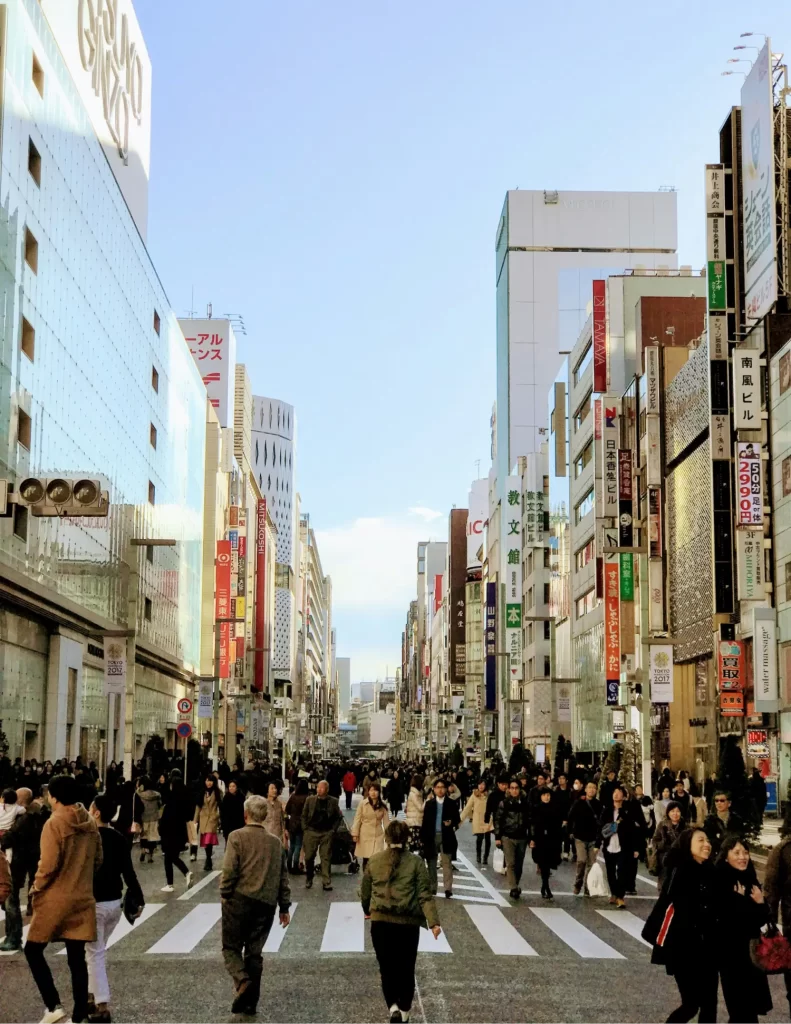
Ginza is Tokyo at its most refined.
Wide boulevards, glossy buildings, and big-name designer stores make this neighborhood one of the most upscale areas in the city.
Think elegant cafés, art galleries, department stores that look more like museums, and sushi counters that deliver an experience as much as a meal.
Staying in Ginza puts you in the middle of a neighborhood that feels spacious, quiet, and extremely well-organized.
Even when the streets are full of shoppers, it never feels overwhelming.
It’s also one of the cleanest areas in Tokyo, and its layout makes it easy to navigate, even for first-time visitors.
Ginza’s location is central and convenient.
You’re a short train ride from Tokyo Station, and well connected to places like Asakusa, Shibuya, and the Imperial Palace.
The metro system here is efficient, and many of Tokyo’s top sights are only a few stops away.
This is a great area for travelers who want comfort and calm at the end of a long sightseeing day.
It is especially well-suited for couples, solo travelers, and anyone who wants to treat themselves to a slightly more elegant Tokyo experience.
One thing to note is that nightlife here is low-key.
You’ll find high-end bars and lounges, but if you’re looking for casual izakayas or lively party scenes, Ginza will probably feel a bit too quiet.

Akasaka is one of those neighborhoods that often flies under the radar.
Located right between Roppongi and the Imperial Palace, it feels far more residential and laid-back than Ginza or Shibuya.
But don’t mistake its calm atmosphere for dullness.
This neighborhood has depth and a distinctly local feel that rewards slower exploration.
Akasaka is often associated with business and government, which means the streets are busy during the day but quiet down at night.
That makes it a good option if you’re looking for a peaceful place to sleep but still want to stay central.
The hotel selection here includes both mid-range business hotels and some very comfortable high-end options, often with better rates than similar ones in Ginza.
What I love about Akasaka is that it has this almost hidden layer of traditional Tokyo.
You’ll stumble across small shrines, tucked-away alleyways, and neighborhood restaurants that have been around for decades.
Dining here is fantastic, with a strong local feel and a good balance of Japanese and international options.
You’re also well connected via the Tokyo Metro, and it is easy to reach places like Shibuya, Shinjuku, and even Ginza itself in less than fifteen minutes.
Just don’t expect luxury shopping or major tourist attractions right on your doorstep.
Choose Ginza if you:
Choose Akasaka if you:
In the end, Ginza is the right choice for travelers looking for a luxurious and stylish Tokyo base.
Akasaka is better for those who value quiet, comfort, and a slightly more local experience without being far from the action.
Your Tokyo story starts in the neighborhood that fits your rhythm best.