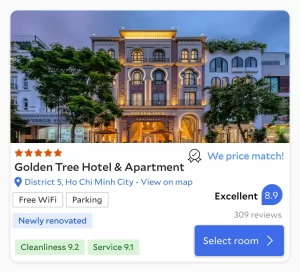
If you’re wondering where to stay in Ho Chi Minh City first time, you’ve come to the right place.
Formerly known as Saigon, this cool city is a popular destination for tourists and expats.
In recent years, the city has grown at a dizzying pace.
The country’s industries and economy have grown relentlessly, and in a commercial city like Ho Chi Minh City, this is even more evident.
It is one of the cities with the highest technology outsourcing in Southeast Asia.
And with such rapid growth, the city is busier than ever.
Although the city has been modernized, it still retains its history, with French colonial buildings and churches scattered throughout the city and the impact of the Vietnam War at the War Remnants Museum and the Cu Chi Tunnels.
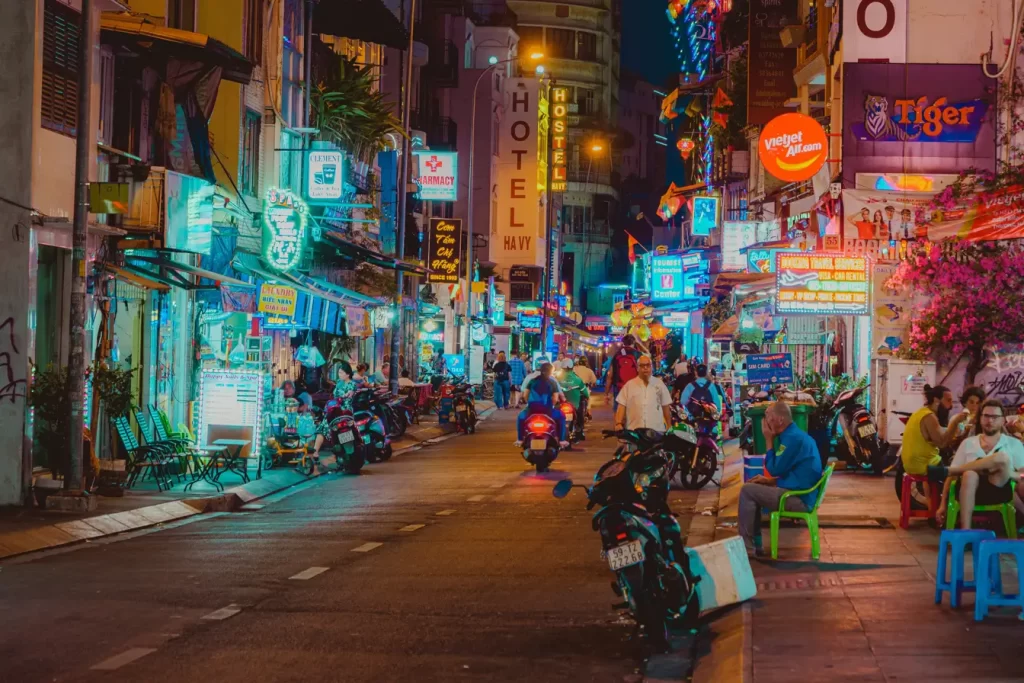
Nightlife is interesting, with excellent and elegant nightclubs, the famous Poc Poc brewery, and the Bui Vien pedestrian street.
And of course, you can discover Vietnamese cuisine.
Yes, we all love spring rolls and pho.
But what about Banh Xeo, Banh Mi (French-influenced), and Nem Nuong?
If you add all these aspects together, Ho Chi Minh City is worth a 3-4 day visit.
To make your life easier, we’ve selected what we believe are the best neighborhoods to stay in if you’re a first-time visitor.
Each recommended area has its pros and cons, which we summarize after each section.
At the end of this article, you’ll find a map of all the recommended neighborhoods, including the city’s highlights.
That said, let’s get straight to our recommendations.
The best areas to stay in Ho Chi Minh City first time are Districts 1, 2, 3, and 5.
The lower the number, the more central the area, but also the more expensive. Also, being in the heart of the city doesn’t always mean being close to the main attractions. Let’s analyze each area.
⚠️ Tip: Tap the section name to go directly to the corresponding section of the article for more information!
District 1 : This neighborhood is the ideal place to stay in Ho Chi Minh City for first time visitors, thanks to its central location, which offers easy access to major attractions, a variety of restaurants, a vibrant nightlife, and a rich cultural experience.
District 2 : An ideal area for tourists seeking a quiet, modern environment with river views, international amenities, and proximity to city center attractions.
District 3 : District 3 is a good area to stay in Ho Chi Minh City for those who prefer a balanced experience. It offers a good mix of local culture, convenient access to popular attractions, and there is plenty of dining and accommodation options to choose from.
District 5 : A great choice for tourists who want to immerse themselves in the city’s rich history. It feels more local culture and is in full contrast with District 1. You can also find a diverse street food scene, while still remaining relatively close to the main attractions.
As always, when choosing a neighborhood, it’s good practice to stay close to the main attractions and in the heart of the city center.
That’s why we believe the best area to stay in Ho Chi Minh City for first-time visitors is around Nguyen Hue and Dong Khoi in District 1.
In District 1, you can easily reach Notre Dame Cathedral, Ben Tanh Market, Café Apartments, the Central Post Office, the Bitexco Tower and observation deck, and the Reunification Palace.
But within District 1, there are some differences:
Most young travelers prefer to stay in this part of District 1. It’s known as Ho Chi Minh City’s backpacker area and offers excellent access to Bui Vien Walking Street.
This part of District 1 can be compared to Khao San Road in Ho Chi Minh City or Hanoi’s Old Quarter.
Expect a lively area, full of bars, clubs, cafes, and restaurants, geared toward young tourists and backpackers.
For this reason, most accommodations are hostels and budget hotels. If you value less noise and more comfort, you definitely shouldn’t stay in this part of District 1.
But if you’re young, looking for adventure and meeting other backpackers, then this is the right place to stay.
For: Backpackers, young travelers.
Advantage: Epicenter of Ho Chi Minh City’s nightlife, close to the main attractions.
Disadvantage: Noisy.


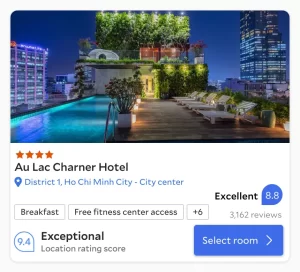
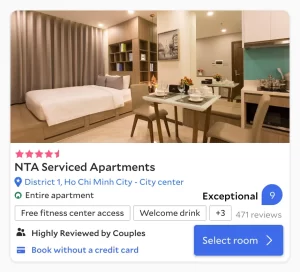
Those seeking greater comfort and luxury while staying in the city’s most central area should definitely stay in Nguyen Hue or Dong Khoi.
Staying in one of these comfortable hotels will give you easy access to the Saigon Opera House, the Reunification Palace, the Ho Chi Minh Statue, the Saigon Skydeck, Ho Chi Minh City Hall, and Notre Dame Cathedral.
For first-time visitors, this is one of the best places to stay.
For: Tourists on a higher budget.
Pros: Fantastic hotels, best location for sightseeing.
Cons: Expensive.
District 2 has undergone significant development, becoming one of the most modern and well-planned neighborhoods in Ho Chi Minh City.
As a tourist, you can expect to find a wide range of amenities, including international restaurants, shopping malls, supermarkets, and entertainment options.
Compared to the bustling and crowded city center, District 2 offers a quieter and greener environment.
The neighborhood is full of parks and green spaces, offering a pleasant escape from the hustle and bustle of city life.
This part of the city is located along the Saigon River, and some areas of the neighborhood offer stunning views of the river.
Along the waterfront, you’ll find bars and restaurants where you can relax and enjoy the view.
District 2 is popular among expats living in Ho Chi Minh City, giving it a diverse and international atmosphere.
This means you’ll find a good variety of international cuisine and services to suit all tastes.
The 2nd arrondissement offers a wide range of accommodations, from luxury hotels to budget guesthouses to serviced apartments.
Although District 2 isn’t located in the heart of the city, it’s still relatively close to Ho Chi Minh City’s main attractions.
The city center is easily accessible by taxi or other transportation, allowing tourists to explore famous sites like Ben Thanh Market, the War Remnants Museum, and Notre Dame Cathedral.
If you prefer a more relaxed and quiet nightlife, District 2 might be your best option.
Although it offers a selection of bars and restaurants, it’s generally not as noisy or crowded as the main nightlife areas in the city center.


District 3 is located close to the city center, making it easy to reach attractions, landmarks, and entertainment venues without having to travel long distances.
Compared to other more modern and expat-focused areas, it offers a more authentic and traditional Vietnamese experience.
You can explore local markets, temples, pagodas, and historical sites to gain a deeper understanding of Vietnamese culture.
District 3 is famous for its diverse and delicious street food.
You can enjoy authentic Vietnamese dishes at local food stalls and family-run restaurants—a great opportunity to savor traditional flavors.
While District 1 is lively and bustling, District 3 tends to be quieter, making it a more peaceful place to stay while still being close to the city center.
Accommodations in the 3rd arrondissement often tend to be more affordable than luxury hotels and serviced apartments in the city center, making it an attractive option for budget-conscious travelers.
From this area, you can explore local markets like Tan Dinh Market and Ba Chieu Market, where you can find unique souvenirs, clothing, and local products at reasonable prices.
District 3 is home to numerous parks and green spaces, such as Tao Dan Park and Le Van Tam Park, which offer a pleasant environment for strolling and relaxing.
Like many areas of Ho Chi Minh City, District 3 is relatively safe for tourists, but it has a reputation for being one of the safest neighborhoods, making it a comfortable place to stay.

District 5, also known as Cho Lon or Saigon’s Chinatown, boasts a rich cultural heritage with a strong Chinese influence.
Here, you can explore numerous Chinese temples, pagodas, and historical sites, offering a unique cultural experience.
Like many Chinatowns around the world, the area is famous for its authentic and diverse street food scene, offering a wide variety of Chinese, Vietnamese, and fusion specialties.
Food stalls and local restaurants offer delicious and affordable food. Foodies should definitely consider staying in this part of the city.
District 5 offers more affordable accommodation options than the city center, making it attractive for those looking to save on accommodation costs.
You can explore lively markets like Binh Tay Market, where you can find a variety of local products, souvenirs, and goods at reasonable prices.
District 5 is home to historic sites such as Thien Hau Temple and Quan Am Pagoda, which offer insight into the area’s fascinating past and religious significance.
The area has a lively and vibrant atmosphere, especially during festivals and celebrations, offering visitors the opportunity to immerse themselves in the vibrant local culture.
District 5 is well connected to other parts of the city by public transportation, allowing tourists to easily reach other attractions and areas of interest.
But as mentioned in the introduction, the city’s lower-numbered neighborhoods are still close to the main attractions.